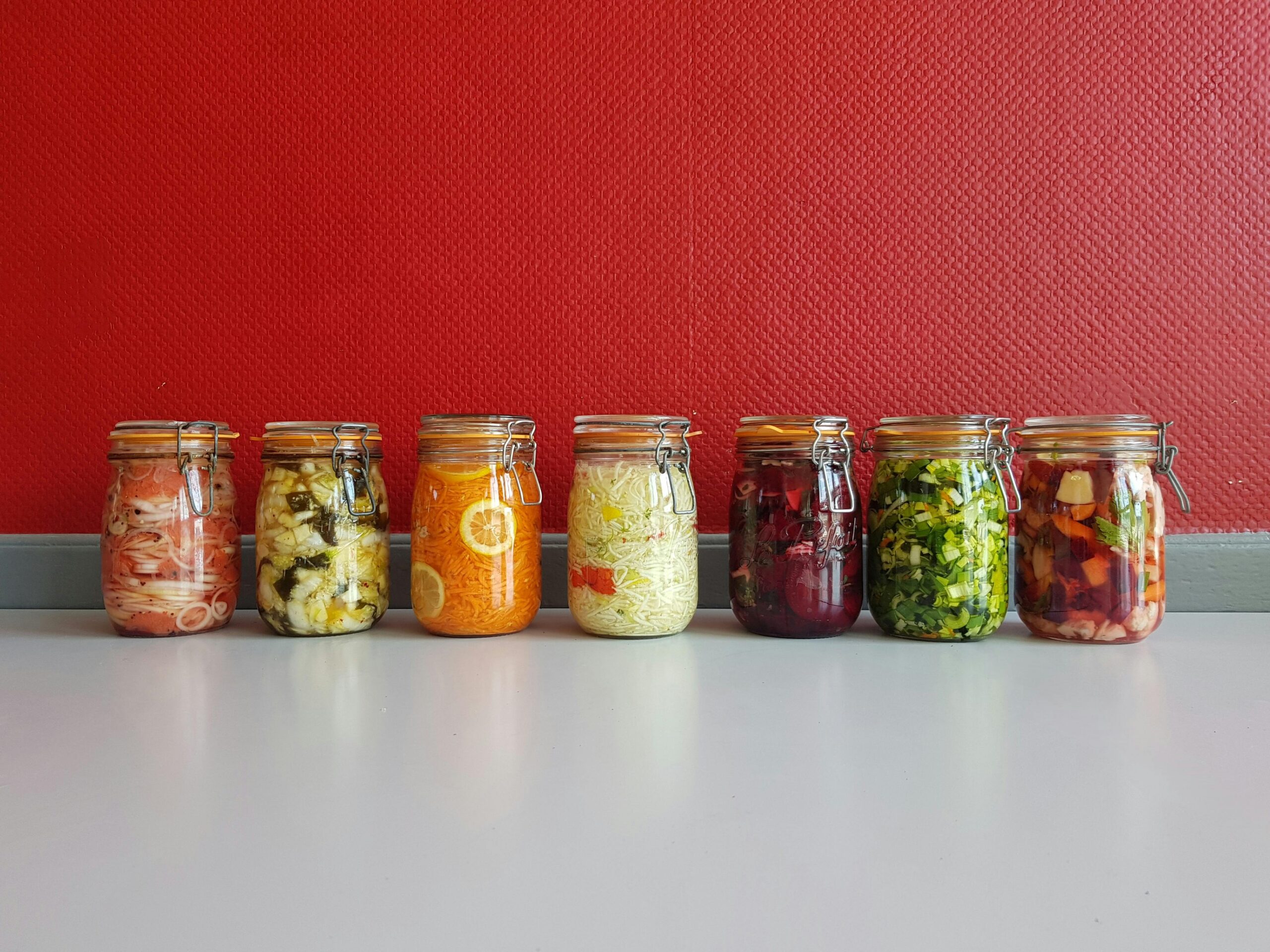
Most of us are familiar with not only the major food groups, but also the “macro” nutrients: protein, carbohydrates, fiber, and the “good / bad” fats. But over the past few generations, we’ve forgotten one of the most important food groups: fermented foods.
No matter where your great-great-grandmother was from, it’s likely that she fermented something for the dinner table. Kimchee, sauerkraut, natto, kvass – all of these foods were ubiquitous at one time in their respective cultures. Common thinking assumes that these foods were fermented as a way of preservation, but there was much more ancient wisdom at play. These lacto-fermented vegetables provided our predecessors with vital probiotics – ie “good” bacteria – that are still critical for our own gut health and immunity.
After taking a course of antibiotics, prevailing wisdom advises taking a bottle of capsulized probiotics to “re-seed” the gut. But these products provide a minimum of beneficial bacteria, and seldom contain more than one or two different strains. What we really need is diversity. Our ancestors’ gut microbiomes were host to hundreds of different types of bacteria, whereas these days we are operating on half of what they had. What’s more, after a round of antibiotics, most of our microbiome gets wiped out, and it takes up to a year to rebuild it. That’s not to say we shouldn’t take antibiotics if they are warranted! But it is to say that a bottle of probiotics from the grocery store is not going to restore the hundreds of different species that we need to maintain a good balance. That’s where probiotic foods come in.
Fermented vegetables, kombucha, and minimally processed yogurt can help us restore the balance. If you are making any of these products at home, they’ll be laced with all the beneficial bacteria that floats in from the air in your kitchen. If you’re buying them at the store, the bacterial load may be a bit diminished by the time you eat them, but they are still an excellent option for re-seeding your gut. These “wild” critters will set up new households in your GI tract and procreate, lacing your gut lining with their offspring.
Why do we care?
We desperately need a good variety of these beneficial bacteria for a number of reasons:
- Healthy bowel movements. since these bacteria live in mostly our large intestines, they are essential for the formation of our stools – and we need to keep the garbage moving OUT!
- Good mood. Serotonin is well known as a major “feel good” hormone, responsible for mental health – but this vital neurotransmitter is made in the GUT. Without gut health, our mood can suffer.
- Proper focus. We also need sufficient serotonin to keep our cognition sharp. If you suffer from lack of focus, a serving of probiotic foods per day is a first step in toward clearing the fog.
- Ability to digest nutrients. Many of our beneficial bacteria create enzymes that allow us to utilize the vitamins in our food. Without adequate B vitamins, Vitamin K, etc, we can suffer deficiencies that further impact our health.
- Strong immunity. This is the biggie. A healthy gut microbiome is key in fending off viruses, harmful bacteria, and even some cancers.
What foods are considered probiotic?
It’s important to understand the distinction between the jar of sauerkraut on the grocery store shelf and the packaged sauerkraut in the refrigerated case. The shelf-stable jar of kraut will be made with vinegar, which gives a similar flavor to the lacto-fermented product, but it is NOT probiotic. Eating too many vegetables pickled in vinegar can actually be detrimental to your health. Instead, look for products that contain just a vegetable, salt, and water.
Take this list with you to your natural-foods grocery store and load up on these essentials!
- Lacto-fermented (probiotic) sauerkraut, kimchee, beets, carrots, or curtido
- Kvass (the liquid, deep-magenta, salty brine from fermented beets)
- Kombucha (should have a small amount of alcohol if it’s properly fermented)
- Miso (make sure it’s organic)
- Natto (fermented soybeans; avoid the ones with MSG-laced flavor packets)
- Plain, full-fat yogurt (containing only milk and live cultures; not fermented but highly probiotic nonetheless)
How do I eat these foods?
Add fermented vegetables to your dinner plate as a side dish, eat some with your morning eggs, or even add a forkful to your smoothies (yes, really!). Miso can be added to bone broth for a lovely, salty light meal, or as a first course for dinner. Yogurt can be drizzled with olive oil and salt for a light lunch, or used in dressings. Kombucha makes a nice alternative to the after-work cocktail. However you get them in, make sure to not boil or fry these foods – the healthy bacteria will die if exposed to high heat.
Where can I learn more?
If you want to understand more about the importance of probiotic foods, how to incorporate them into your daily diet, and even make some of them yourself, here’s a short reading list:
- Sally Fallon’s Nourishing Traditions: easy instructions on how to ferment many different types of vegetables.
- Sandor Katz’s Wild Fermentation: yet more recipes for fermented foods and beverages, and at times hilarious.
- Julie O’Brien & Richard Climenhage’s Fresh & Fermented: how to add fermented foods into your meals – these are the folks who dared me to put sauerkraut in my smoothies!
Enjoy!
Related
Leave a Reply Cancel reply
Explore
01. Services
02. Resources
03. Blog
04. About
05. Contact
06. Patient Portal
07. Schedule
Sharone Franzen is a licensed acupuncturist and herbalist at Blue Willow Acupuncture, based in the Lakeside Village/West Portal neighborhood of San Francisco, California.
Contact
2636 Ocean Ave
San Francisco, CA 94132
(415) 572-1797
For appointments:
(415) 812-9860
© Blue Willow Acupuncture. All rights reserved.
